When you have decided that donor eggs are the right path to building your family, a new set of questions quickly follows. Should you choose a fresh donor cycle or frozen donor eggs? Are frozen eggs as healthy as fresh ones? How soon could you actually begin treatment? These are thoughtful questions, and they deserve clear, honest answers rather than marketing promises.
Working with a frozen egg donor has become one of the most common ways intended parents move forward with donor egg IVF, largely because of advances in a freezing method called vitrification. In this guide, we explain what frozen donor eggs are, how vitrification protects egg quality, what the research says about success rates, and when frozen eggs may be the better fit for your family. We also walk you through how to browse available frozen donor egg lots at Lotus Donor Bank, so you know exactly what to expect when you are ready to take the next step.
What Are Frozen Donor Eggs?
Frozen donor eggs are mature eggs retrieved from a carefully screened donor, flash-frozen shortly after retrieval, and stored in liquid nitrogen until an intended parent is ready to use them. Rather than coordinating a brand-new retrieval cycle around your treatment timeline, you select eggs that have already been retrieved, evaluated, and banked. When you are ready, the eggs are shipped to your fertility clinic, warmed, fertilized with sperm from your partner or a sperm donor, and grown into embryos for transfer.
Eggs are typically grouped into what are called lots, which are sets of eggs from a single donor's retrieval reserved for one intended parent or family. Because the eggs have already been retrieved and counted, you know in advance exactly how many eggs your lot contains. If you would like a broader overview of how this option fits into family building, our guide to donor eggs explains the full range of paths available through Lotus.
Before any eggs are banked, the donor completes a comprehensive screening process that follows FDA requirements for reproductive tissue donors and ASRM recommendations. This includes medical history review, infectious disease testing, genetic carrier screening, and a psychological evaluation. Frozen eggs are stored in secure cryogenic tanks at extremely low temperatures, where biological activity effectively pauses. Properly stored eggs can remain viable for many years, which is part of what makes a frozen donor egg bank such a flexible resource for intended parents.
How Vitrification Works
Vitrification is the freezing technique that made modern frozen donor egg programs possible. The word comes from the Latin for glass, and that is a helpful way to picture it. Instead of freezing slowly, the egg is cooled so rapidly that the water inside it turns into a glass-like solid rather than forming ice crystals.
Avoiding ice crystals matters because the egg is one of the largest cells in the human body and contains a high proportion of water. In older slow-freezing methods, ice crystals could form inside the egg and damage delicate internal structures, which led to lower survival after thawing. With egg vitrification, the embryology team first places each egg in protective solutions called cryoprotectants, which draw water out of the cell and help shield it. The egg is then plunged directly into liquid nitrogen at roughly minus 196 degrees Celsius.
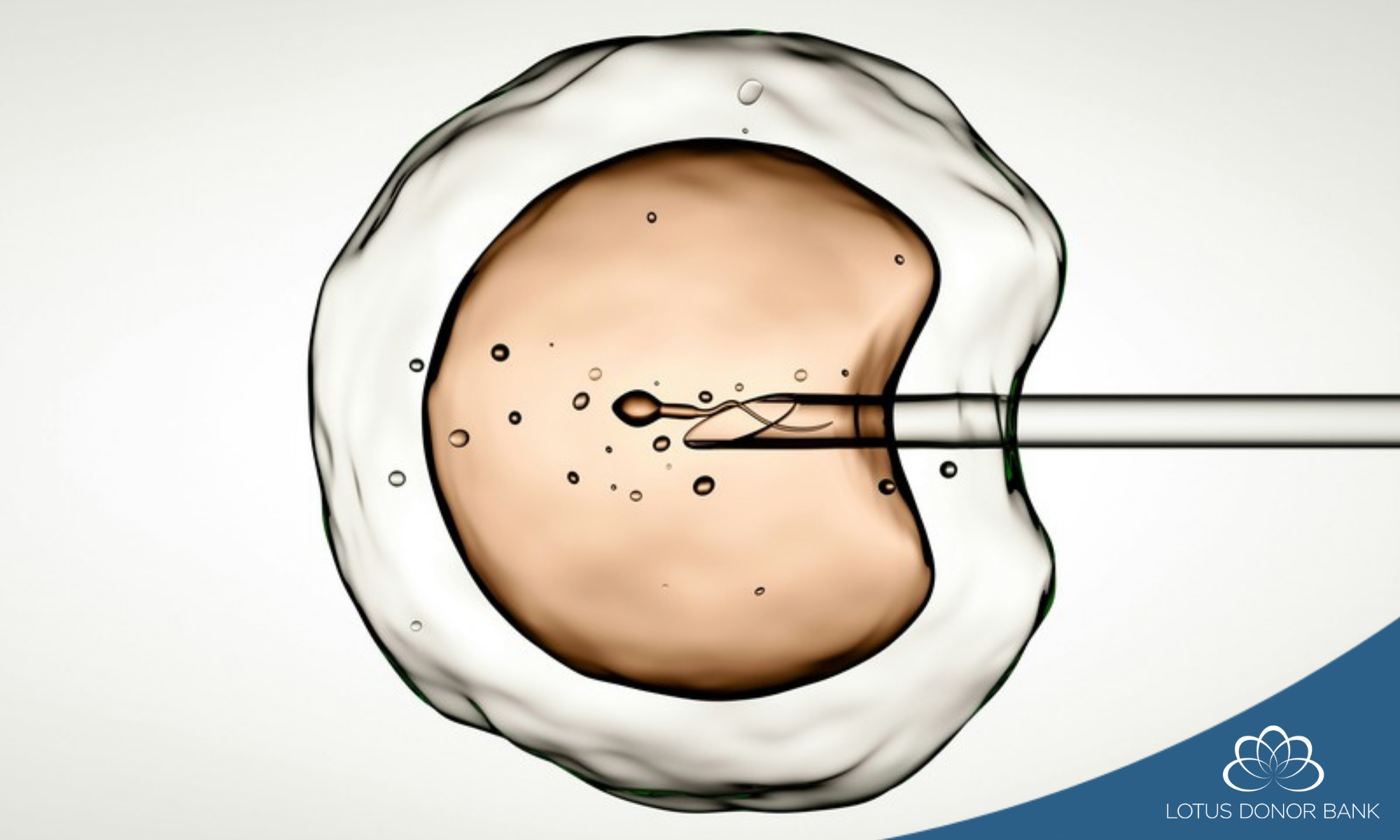
When it is time to use the eggs, the lab reverses the process through a careful warming protocol that gradually rehydrates each egg. Surviving eggs are then fertilized, usually through intracytoplasmic sperm injection (ICSI), in which a single sperm is placed directly into each egg.
Oocyte vitrification has been refined over more than a decade. In 2012, the American Society for Reproductive Medicine removed the experimental label from egg freezing after reviewing research showing outcomes comparable to fresh eggs in experienced laboratories. The precise protocols vary from lab to lab, and the skill of the embryology team plays an important role in results, which is why Lotus vitrifies every egg in our own San Diego laboratory with a single dedicated embryology team, using the Kitazato Cryotop method, in a CAP-accredited, FDA-registered facility. You can review our full lab standards and vitrification page for more detail.
Frozen vs. Fresh Donor Eggs: Key Differences
Both frozen and fresh donor eggs can lead to healthy pregnancies, and Lotus offers both options. The right choice depends on your priorities, your clinic, and your personal timeline. Here are the differences that matter most to intended parents.
Availability and speed. With frozen donor eggs, the retrieval has already happened. Once you select a donor and reserve a lot, the eggs can often be shipped to your clinic within a few weeks. A fresh cycle, by contrast, requires matching with a donor, completing her screening, and waiting for her stimulation and retrieval, a process that can take several months from match to embryo transfer.
Predictable egg quantity per lot. In a fresh cycle, no one knows exactly how many eggs will be retrieved until retrieval day. Frozen lots remove that uncertainty because the number of eggs is known before you commit. This lets you and your physician plan with a clear picture of what you are working with.
Scheduling flexibility. Fresh cycles require the donor's cycle and the recipient's uterine preparation to be synchronized, which means coordinating medications and appointments between two people. With frozen eggs, the eggs wait for you. Your clinic can prepare your uterine lining on a schedule that works for your body, your work, and your life.
Number of eggs available to you. A fresh cycle often provides the full retrieval from one donor to one recipient, which can mean more eggs and potentially more embryos for future siblings. Frozen lots typically contain a smaller, defined number of eggs. Be specific: Lotus's guarantee programs are built on 6-egg and 10-egg frozen lots. For many families this is more than enough for their goals, while others planning several children may prefer a fresh cycle or reserve additional lots.
Understanding these trade-offs helps you and your physician choose the option that aligns with your goals. You can review how each step unfolds on our egg donation process page.
Success Rates: What the Data Shows
Success rates are understandably one of the biggest questions intended parents ask, and it is important to look at them honestly. No clinic, bank, or agency can guarantee a pregnancy, and individual outcomes depend on many factors. That said, the research on frozen donor eggs is encouraging.
Thaw survival is the first milestone. Published studies from experienced laboratories, including widely cited research by Cobo and colleagues on vitrified donor oocytes, have reported post-warming survival rates of roughly 90 percent or higher. Lotus's own donor egg lots see a 91% thaw survival rate. In practical terms, most vitrified eggs survive the warming process intact and are available for fertilization.
When it comes to live births, national data collected by the Society for Assisted Reproductive Technology (SART) and the Centers for Disease Control and Prevention (CDC) consistently show that donor egg IVF has some of the highest success rates of any fertility treatment, because the eggs come from young, healthy, screened donors. In recent years of SART reporting, live birth rates per embryo transfer with frozen donor eggs have generally been close to those of fresh donor eggs, with fresh cycles sometimes showing a modest advantage. Because figures shift from year to year, we encourage you to review the latest SART and CDC reports alongside your physician's own clinic data.
Several factors influence how many embryos you ultimately have and how successful a transfer may be:
Laboratory expertise. The experience of the embryology team in both vitrifying and warming eggs has a meaningful effect on survival and fertilization.
Number of eggs in the lot. More eggs generally means more opportunities to create healthy embryos.
Sperm quality. Fertilization and embryo development depend on both the egg and the sperm.
Recipient uterine health. A healthy, well-prepared uterine lining supports implantation, regardless of the egg source.
Embryo transfer approach. Your physician's recommendations about embryo testing and single embryo transfer also shape outcomes.
When Frozen Donor Eggs Are the Better Fit
Frozen donor eggs are not the right choice for every family, but for many intended parents they offer clear advantages. Frozen eggs may be the better fit if any of the following sound familiar.
You are ready to move forward now. If you have already spent months or years on fertility treatment, waiting for a fresh donor cycle can feel exhausting. Frozen eggs let you begin sooner, often within weeks of selecting your donor, which can be especially meaningful for time-sensitive family building.
You want to avoid cycle synchronization. Coordinating your cycle with a donor's cycle adds complexity and potential delays. With frozen eggs, the timeline centers on you and your clinic, and there is no risk of a cycle being postponed because of a donor's schedule or response to medication.
You value predictability in planning. Knowing the exact number of eggs in your lot from the start makes it easier to plan your treatment with confidence. Many intended parents appreciate the clarity of a defined, known starting point.
You live far from your chosen donor. Because frozen eggs are shipped to your clinic, you can choose from a nationwide pool of donors without arranging travel for anyone. Lotus ships internationally as well, to the United States, Canada, Mexico, the Czech Republic, Singapore, Vietnam, and Australia.
On the other hand, if you hope to have several children from the same donor, or you are looking for a donor who has not yet banked eggs, a fresh cycle may suit you better. Your coordinator and physician can help you weigh these considerations based on your family goals.
Browsing Available Frozen Donor Egg Lots at Lotus
At Lotus Donor Bank, we have made it simple to explore frozen donor eggs from a diverse group of carefully screened donors. You can begin by using our donor search to view donor profiles, where you will find information such as physical characteristics, education, family health history, personal interests, and whether frozen lots are currently available.
Once you find a donor who feels right for your family, the process typically looks like this:
Reserve your lot. Your Lotus coordinator helps you place a hold on the frozen lot you have selected and confirms the number of eggs it contains.
Coordinate with your clinic. We work directly with your fertility clinic to confirm their embryology lab is ready to receive and warm vitrified eggs, and to align on your treatment timeline.
Arrange shipping. The eggs travel in a specialized cryogenic shipping container designed to keep them at stable, ultra-low temperatures throughout transit.
Begin treatment. Your clinic prepares your uterine lining, warms and fertilizes the eggs, and plans your embryo transfer.
Lotus also offers guarantee programs for qualifying frozen donor egg lots, named Option A One Blastocyst Guarantee (for an eligible 6-egg lot, guaranteeing at least 1 blastocyst), Option B Two Blastocyst Guarantee (for a 10-egg lot, guaranteeing at least 2 blastocysts, with a one-time replacement), and the One Birth Journey program. These programs are designed to provide additional reassurance if a lot does not result in the outcome outlined in the program terms. Your coordinator will explain which lots qualify and how the program works so you can make an informed decision.
We also offer both ID-release and non-ID-release donors, so you can choose the level of future contact that feels right for your family and your child.
Frequently Asked Questions
What are frozen donor eggs?
Frozen donor eggs are eggs retrieved from a screened donor and preserved through vitrification, a rapid freezing method that prevents damaging ice crystals from forming. The eggs are stored in liquid nitrogen until an intended parent selects them. They are then shipped to the recipient's fertility clinic, warmed, fertilized, and developed into embryos for transfer, allowing treatment to begin without waiting for a new donor retrieval cycle.
Are frozen donor eggs as successful as fresh donor eggs?
Research from experienced laboratories shows that vitrified eggs survive warming at high rates, often 90 percent or more, and national SART data show frozen donor egg outcomes that are generally close to fresh donor egg outcomes, with fresh cycles sometimes showing a modest edge. Individual results depend on lab expertise, the number of eggs, sperm quality, and your own health, so your physician is the best source for a personalized outlook.
How many frozen eggs should I reserve?
The right number depends on your family goals and your physician's guidance. Intended parents hoping for one child may find a single lot sufficient, while those hoping for siblings from the same donor may consider reserving more eggs. Your physician can review factors such as sperm quality and your clinic's outcomes to help you decide, and your Lotus coordinator can share what lots are currently available.
How are frozen donor eggs shipped to my clinic?
Frozen donor eggs are shipped in a specialized cryogenic container, often called a dry shipper, that holds the eggs at ultra-low temperatures using liquid nitrogen absorbed into the container walls. Lotus coordinates the shipment directly with your clinic's embryology lab, confirms receiving details, and tracks the shipment so your eggs arrive safely and are transferred into the clinic's storage upon arrival.
Does Lotus offer a guarantee on frozen donor egg lots?
Lotus offers guarantee programs for qualifying frozen donor egg lots. These programs are designed to give intended parents added peace of mind by outlining what happens if a lot does not meet the outcome defined in the program terms. Eligibility and details vary by lot, so your Lotus coordinator will walk you through the specific terms before you make a reservation.
Find the Right Frozen Donor Eggs for Your Family
Choosing a frozen egg donor is a deeply personal decision, and you do not have to make it alone. Whether you are ready to explore profiles today or simply want to talk through your options, the Lotus team is here to support you with clear information and genuine care.
Browse available frozen donor egg lots through our donor search, or visit Lotus Donor Bank to speak with a coordinator who can help you find the right fit for your family.